
Long Pie Pumpkins
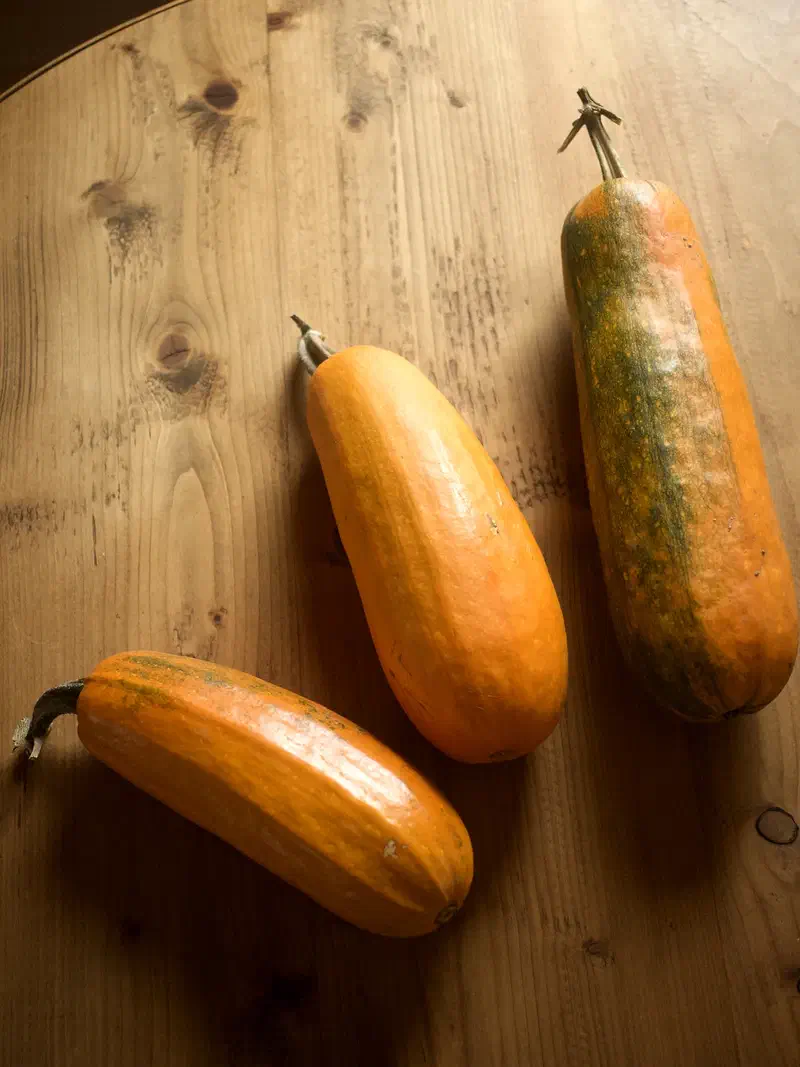
From whole pumpkin to pie.
Long Pie is Maine’s oblong pie pumpkin. It has long been popular in Androscoggin County, and it has had increased attention from seed stewards since the late 1980s.
We started with a packet of seed in 2023 and have saved seed from our best fruits every fall since. These were picked on October 17, the day before the first frost, and have been curing since. Each one is weighed and numbered, so you can pick the size you want. Some still show green streaks. That’s fine: they keep turning orange in storage.
From pumpkin to pie
Most pumpkin pie starts with a can. Starting with a whole pumpkin takes about an hour of mostly waiting.
- Halve it. Set the pumpkin on its side and cut it lengthwise with a big knife. The long shape makes this easier than with a round pumpkin.
- Scoop. Scrape out the seeds and stringy pulp with a spoon. Set the seeds aside if you want to plant them (see below).
- Roast. Lay the halves cut side down on a baking sheet and roast at 375°F until a fork slides easily through the skin, usually 45 minutes to an hour depending on size.
- Purée. When it’s cool enough to handle, scoop the flesh away from the skin and mash it, or run it through a blender or food mill until smooth.
- Drain if it’s wet. If the purée looks watery, let it sit in a sieve lined with cheesecloth or a coffee filter for half an hour. A drier purée makes a firmer pie.
- Measure. A 9-inch pie takes 2 cups of purée, about a pound. Extra purée freezes well in 2-cup portions, one pie each.
A pie from 1896
Fannie Farmer’s Boston Cooking-School Cook Book gives the whole recipe in one line of instructions:
1½ cups steamed and strained pumpkin, ⅔ cup brown sugar, 1 teaspoon cinnamon, ½ teaspoon ginger, ½ teaspoon salt, 2 eggs, 1½ cups milk, ½ cup cream. Mix ingredients in order given and bake in one crust.
She steamed her pumpkin rather than roasting it, and gave no oven temperature. In 1896 most kitchens baked in the oven of a cast-iron range fired with coal or wood; her book also describes gas ranges, which were new then. In rural Maine it would have been a wood cookstove. Cooks judged the heat by feel, and she says so plainly: “Experience is the best guide for testing temperature of oven. Various oven thermometers have been made, but none have proved practical.”
A pie from 1975
For a modern recipe, try the Old-Fashioned Pumpkin Pie in Betty Crocker’s Cookbook (1975 edition, page 331). After decades of pumpkin pies, it’s the one we think is best. Its 9-inch pie uses 2 cups of pumpkin with evaporated milk or light cream, and bakes hot at 425°F for 15 minutes, then at 350°F for about 45 minutes more, until a knife in the center comes out clean. That bake works for Fannie Farmer’s pie too.
In the kitchen
Our favorite is pie. We also make a sweet casserole: cube the flesh, toss it with maple syrup, cream, vanilla and a little cardamom, and bake until it’s soft and the edges caramelize. Next on our list is roasting it with black walnuts, which are in season now.
Saving the seeds
Long Pie is open-pollinated, so its seed grows more Long Pie, as long as pollen from a different variety of C. pepo didn’t get to the flowers first. The only pepo we grow is Long Pie, so seed from our pumpkins should come true. They’re grown in an open field, though, so we can’t rule out a visit from a bee that stopped at somebody’s zucchini first. Rinse the seeds, dry them on a plate for a couple of weeks, and plant them after the last spring frost.
Insects pollinate the flowers so they can turn into pumpkins. Squash bees, ground-nesting specialists that spread north as people carried squash with them, do much of the work where they live, along with bumblebees and honeybees. None of them care what variety they’re visiting. Long Pie is Cucurbita pepo, the same species as zucchini, crookneck, acorn, delicata, most jack-o’-lanterns and the little ornamental gourds, and any of them can cross with it. John Navazio’s The Organic Seed Grower suggests half a mile to two miles between pepo seed crops, depending on what’s in between.
So keeping an old variety true comes down to distance and judgment. Each year we set aside a few pumpkins with traits we like and save their seed. Growers kept seed this way for a long time before anyone sold it in packets.
Storing
They keep well, and how long depends on where you keep them. A cool, dry place around 50°F, like the unheated upstairs of an old Maine farmhouse, is best. Somewhere warmer or damper, plan on pie sooner rather than later, or roast and freeze the purée.
The longer story is in the Farm Log: Wasawéskar.
Certified Organic by MOFGA Certification Services, LLC.