
Wasawéskar
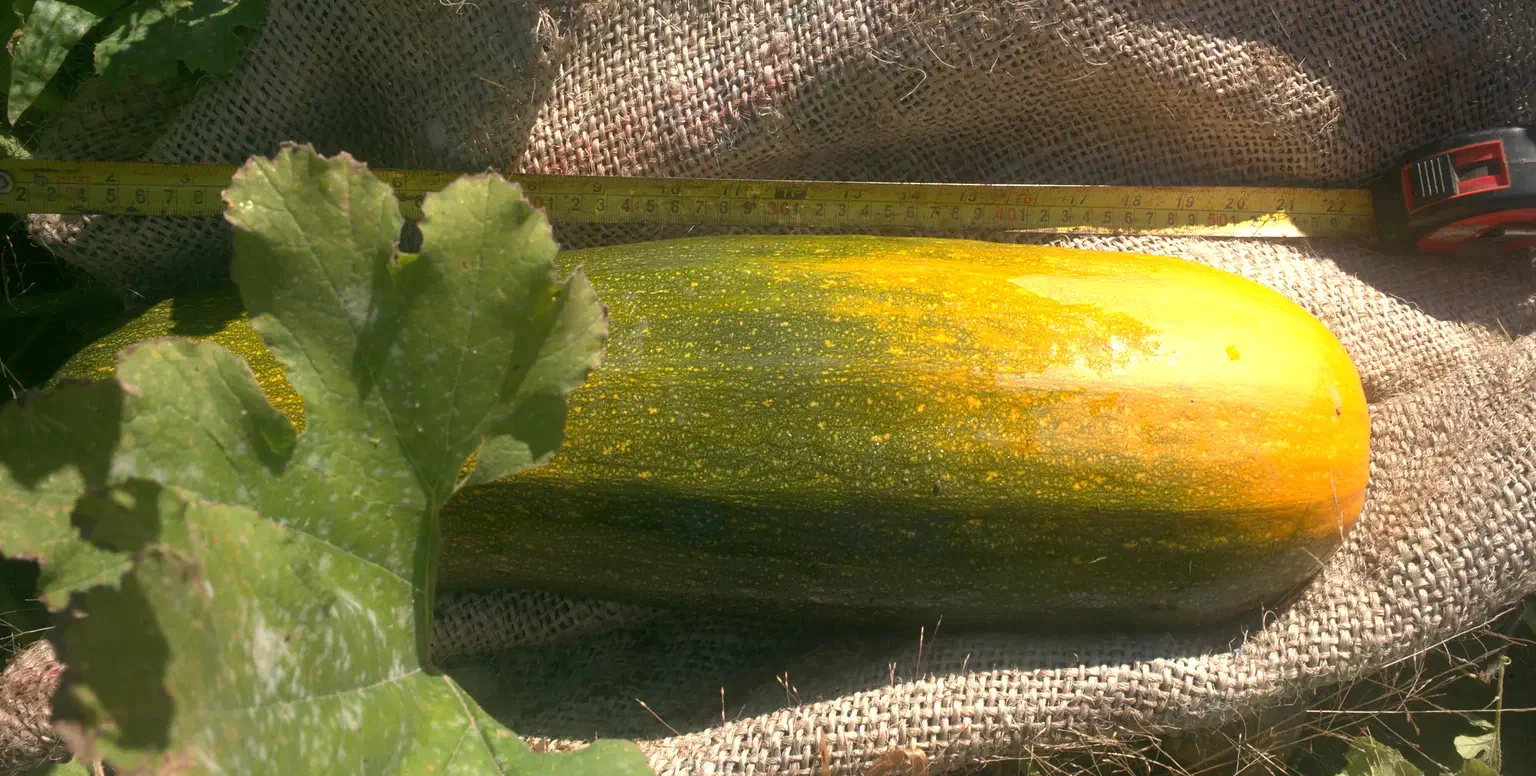
The pumpkin in the photo is a Long Pie, the oblong pie pumpkin that Maine farms once grew in quantity. It was still on the vine this morning, twenty inches along the tape, its ground side just turning orange.
We started with a packet of seed from Fedco in 2023 and have saved seed from the biggest fruits every fall since. Three years is a small thing in the history of pumpkins. The species this pumpkin belongs to was domesticated in Mexico something like ten thousand years ago, and pumpkins were being grown a few miles from here long before anyone wrote the place down. Rind fragments come up in the ground at all three of the old Norridgewock archaeological village sites, the earliest around five hundred years old. Father Rasle, writing from that village in 1723, listed the people’s food as corn, beans and pumpkins, and in the dictionary he kept there the pumpkin is 8a’sa8é, which he would have heard as something like wasawé. Under it he recorded a farmer’s phrases: weeding among the pumpkins, the rind, the flowers coming on, baking them in the ashes, and 8a’sa8éskar, wasawéskar, the seeds, which he notes are set aside “to make them sprout.” Every one of those growers was choosing which fruits to keep seed from. We are late arrivals to a very long line.
The variety’s own paper trail is thinner and starts in seed catalogs. By 1887 Burpee was selling an oblong Azores pumpkin it called the Nantucket Pie, and in 1889 it introduced a green-to-orange one it named Golden Oblong, “fifteen to twenty inches in length,” which is the size ours have grown back to. Whether either is the same plant as today’s Long Pie nobody can prove. What is documented is that the variety nearly vanished, and that LeRoy Souther of Livermore Falls kept it going for thirty years until a squash breeder saw his fruit at the Common Ground Fair in 1988 and put it back into commerce.
This year on Wilder Farm the choosing gets harder. Size is easy to see from the field edge. Flavor isn’t. So the big ones aren’t for sale. They’ll cure on the porch until they turn orange, and in late October we’ll cut each one open, measure the wall, take a sugar reading, roast a cube, note the flavors, and write it down. Seed goes back into the bag only from the fruits that are big and good. The smaller ones, ten to twelve inches, are the ones you’ll see on the harvest list in October.
The seed we keep this fall will be one small entry in a ledger that runs back past Rasle, past the first fields at Norridgewock.
This variety will keep well into the winter if you have a cool dry place around 50°F. This used to be the unheated upstairs of Maine farmhouses. If you don’t have a place like this, plan to eat your pumpkin pies sooner rather than later!