
The Maple Allée
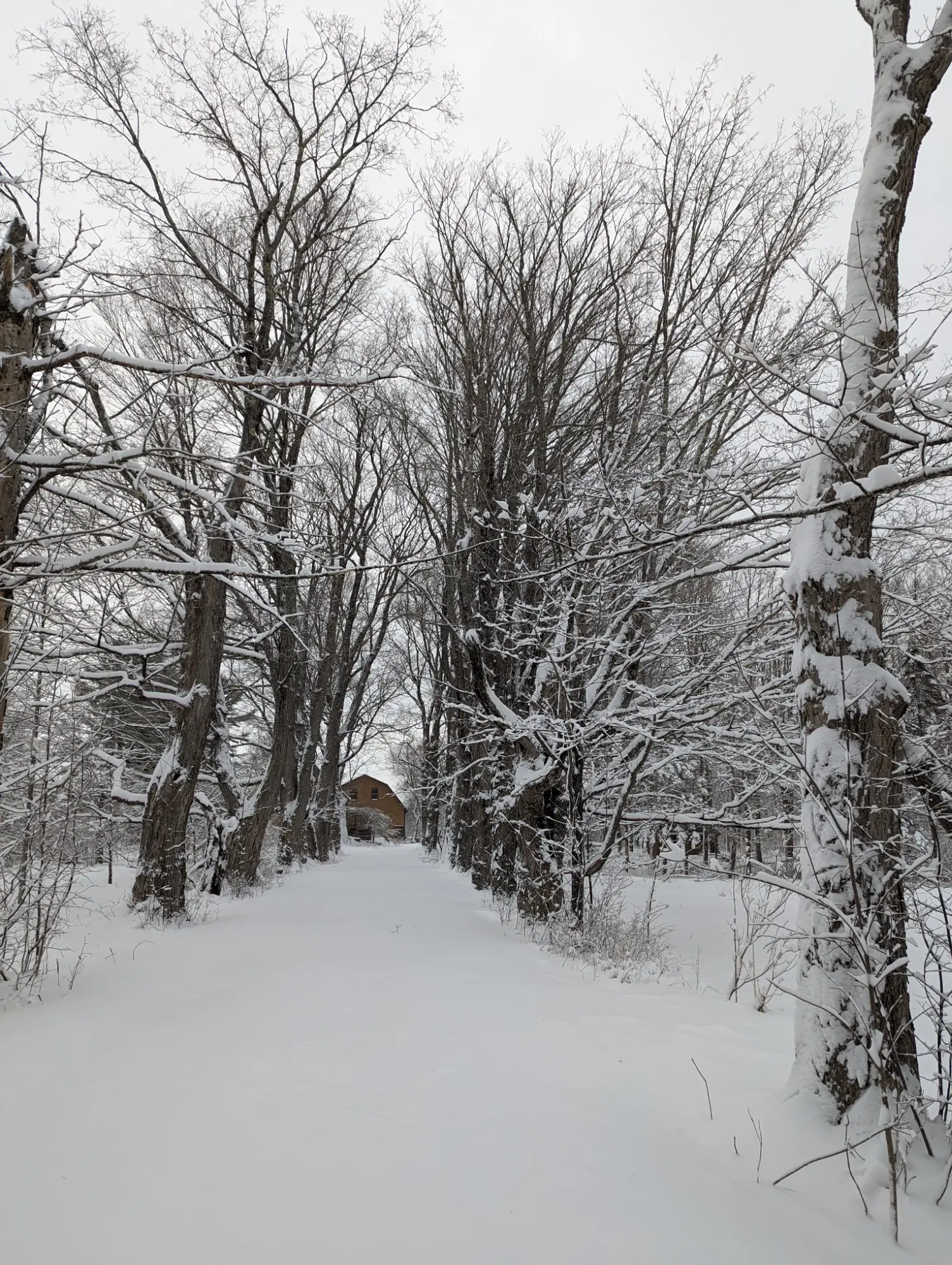
The old sugar maples that line the drive to Wilder Farm have been here longer than the house. They stand in two rows, arching over the road like the nave of a church, and in winter, when the leaves are gone and the snow is deep, you can see the full architecture of them — the massive trunks, the reaching limbs, the way they hold snow along their upper branches like white veins against the sky.
They were planted by the settlers who built this farm, set deliberately along the drive so they could be tapped each spring. But this land in Norridgewock was home to the Abenaki long before that, and the trees the settlers replaced — or planted among — had fed people here for thousands of years. Sugar maples were among the most important food sources for the people of this region. The practice of tapping trees and boiling sap into sugar predates European contact by centuries. The settlers who lined this drive with maples were, knowingly or not, continuing something ancient.
If you look closely at the trunks, you can read their history. Old tap scars climb the bark at different heights — and the height tells you the snow depth the year the tap was set. A scar at waist height means a lean snow year. One you have to look up to see means the drifts were four or five feet deep and the farmer stood on top of the snow to drill. The trees carry a record of winters going back generations.
I remember gathering sap as a child on my family’s farm next door, Wilder-ness. My father drove the John Deere 40 bulldozer, pulling a 200-gallon tank on a sled behind it, and we would tromp through the snow from tree to tree, lifting the metal buckets off their spiles and emptying them into the tank. Sometimes the sap would be partly frozen and we’d toss out the ice before pouring — a small shortcut on the boiling, concentrating the sugar by a fraction before we ever lit the fire.
We’d haul the full tank back to the sap house, stoke the wood-fired evaporator, and run it late into the night. The steam would pour out of the cupola and the whole cabin would smell like maple. The goal was always Grade A Fancy — the lightest, most delicate syrup — and the trick was not letting the sap sit around. Fresh sap, boiled the same day it ran, made the palest gold. Let it wait and it darkened, still good but not the same.
Wilder Farm continues to make syrup on a small scale. We still use metal buckets instead of the plastic tubing that most operations have switched to. It’s slower and harder work, but we have chosen to avoid plastic in our food gathering wherever we can. The buckets go on the same trees, in the same allée, following the same rhythm of freeze and thaw that has drawn people to these maples for longer than anyone can remember.
Modern winters are a challenge for boiling syrup. Maple sap flows when nights drop below freezing and days warm above it — that rhythm of freeze and thaw is what creates the pressure inside the tree. Our winters have become so mild and unpredictable that it’s hard to know how much sap we’ll get in a given year, or for how long. Some springs the run is short and weak. The season that used to be reliable is no longer something you can count on.
The trees face other threats too. Sugar maples are sensitive to road salt, and the ancient giants that line Wilder Hill along the road through Wilder-ness are dying from it. You can see it in the crown dieback, the thinning canopy, the limbs that don’t leaf out anymore at the tops of the trees. Many have been reduced to stark pillars without branches — still standing, still home to woodpeckers and owls and the quiet work of decay, but no longer the trees they were. The maples in this allée survive because they stand along the private drive to Wilder Farm, away from the salt trucks. In a way, the driveway that was built to reach them is what’s keeping them alive.
The trees are old now. Some have lost major limbs. A few lean. But they still stand in their two straight lines, the way they were planted, and every March, when the days warm above freezing and the nights still drop below, the sap rises in them the same way it always has. Farming here has always meant holding a line — against pollution, against climate unpredictability, against whatever wants to undo the work. These maples are that line, literally. And we walk out with our buckets and our drill and take our turn.